Method of preservation codes
How the item is protected: physical protection, preservative coating, waterproof, watervaporproof or desiccated bags and containers, or a specialized procedure.
| Code | Description | Type |
|---|---|---|
| 10 J-I | Physical protectionFull requirement (5.2.3.3)Physical protection. The unpreserved item(s) shall be protected from physical damage and mechanical malfunction. Cushioning materials, dunnage, blocking and bracing shall be applied as required to protect the item(s) and the enclosing media and restrict the movement of the item within the container. The materials selected for all blocking and bracing, and the design and application thereof, shall be compatible with the item and its bearing load limitations. Materials shall be as clean and as dry as practicable. Method 10 unit packs shall pass the applicable inspection requirements of table G-I. |
 |
| 20 J-I | Preservative coatingFull requirement (5.2.3.4)Preservative coating. Items shall be treated with appropriate preservatives in accordance with the procedures of 5.2.2.2 or 5.2.2.3. Contact preservative coated items shall be wrapped in material conforming to MIL-PRF-121 or QQ-A-1876. Flexible wraps shall snugly enclose the coated part or item and be secured to prevent unintentional unwrapping. Parts or items coated with hard film preservatives conforming to MIL-PRF-16173, Grade 1 or 4, may, when dried, be exempted from wrapping. Projections, sharp edges, or other features of the item, that may damage the wrap, shall be cushioned as required in accordance with 5.2.3. The type of cushioning and wrapping material used shall be commensurate with the size, weight and configuration of the preserved part or item. Method 20 unit packs shall pass the applicable inspection requirements of table G-I. When it has been determined to protect items with VCI, they shall be preserved in accordance with 5.2.4.9. |
 |
| 30 J-I | Waterproof protection (general method; the specific method is coded 31-35, 41-45 or 51-55)Full requirement (5.2.3.5)Waterproof or waterproof-greaseproof protection with preservative as required. Items protected in accordance with Method 30 shall be heat sealed within a waterproof or waterproof-greaseproof bag. Projections, sharp edges or other physical characteristics of the item that may damage the waterproof or waterproof-greaseproof barrier or container shall be cushioned in accordance with 5.2.3. The item shall also be cushioned as required to mitigate shock and vibration, thereby preventing physical and functional damage to the item. For all Methods of Preservation where the bag is the unit container and the outer/shipping container is a wood box, see 5.2.3(l). Unless otherwise specified, preservative coating requirements shall be determined in accordance with 5.2.2.1. All unit packs prepared in accordance with any method of this basic group shall pass the applicable quality assurance tests specified in tables G-I and G-II. |
 |
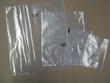
| 31 J-I | Waterproof bag, heat sealedFull requirement (5.2.3.5.1)Waterproof bag, heat sealed. The item, preserved, wrapped and cushioned as required in 5.2.3.5, shall be enclosed in a heat-sealed bag conforming to MIL-DTL-117, Type III, Class B, Style 2. (Note: When specified in the contract or order, a carton or box shall be required to effect the unit container, and the primary cushioning shall be placed between the outside of the bag and the inside of the carton or box.) When it has been determined to protect items with VCI, they shall be preserved in accordance with 5.2.4.9. |
 |
| 32 J-I | Container, waterproof bag, heat sealedFull requirement (5.2.3.5.2)Container, waterproof bag, heat sealed. The item, preserved, wrapped and cushioned as required in 5.2.3.5, shall be enclosed in a close fitting container (box) selected from table C-I, which in turn shall be enclosed in a heat-sealed waterproof bag conforming to MIL-DTL-117, Type III, Class B, Style 2. |
|
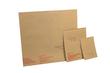
| 33 J-I | Greaseproof-waterproof bag, heat sealedFull requirement (5.2.3.5.3)Greaseproof-waterproof bag, heat sealed. The item, preserved, wrapped and cushioned as required in 5.2.3.5, shall be enclosed in a close fitting heat-sealed bag conforming to MIL-DTL-117, Type II, Class C, Style 1, 2 or 3. (Note: When specified in the contract or order, a carton or box shall be required to effect the unit container, and the primary cushioning specified in the contract or order shall be placed between the outside of the bag and the inside of the carton or box.) When it has been determined to protect items with VCI, they shall be preserved in accordance with 5.2.4.9. |
 |
| 40 J-I | Watervaporproof protection (general method; the specific method is coded 31-35, 41-45 or 51-55)Full requirement (5.2.3.6)Watervaporproof protection with preservative as required. Items protected in accordance with Method 40 shall be heat sealed within a watervaporproof enclosure. Projections, sharp edges or other physical characteristics of the item, which may damage the watervaporproof enclosure, shall be cushioned as required in accordance with 5.2.3. The item shall also be cushioned as required to mitigate shock and vibration, thereby preventing physical and functional damage to the item. For all Methods of Preservation where the bag is the unit container and the outer/shipping container is a wood box, see 5.2.3(l). Unless otherwise specified, preservative coating requirements shall be determined in accordance with 5.2.2.1. All unit packs prepared in accordance with any method of this basic group shall pass the applicable quality assurance tests specified in tables G-I and G-II. |
|
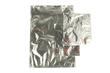
| 41 J-I | Watervaporproof bag, heat sealedFull requirement (5.2.3.6.1)Watervaporproof bag, heat sealed. The item, preserved, wrapped and cushioned as required in 5.2.3.6, shall be enclosed in a close fitting heat-sealed bag conforming to one of the following: a. MIL-DTL-117, Type I, Class E, Style 1, 2 or 3 (see notes 2/, 4/). b. MIL-DTL-117, Type I, Class F, Style 1, use intended for ESD sensitive items only (see note 1/). c. MIL-DTL-117, Type II, Class E, Style 1 (see notes 2/, 3/). d. MIL-DTL-117, Type IV, Class E, Style 1 (see notes 2/, 4/). 1/ For electrostatic protection refer to 5.2.4.1. 2/ When specified in the contract or order, a carton or box shall be required to complete the unit container and the primary cushioning shall be placed between the outside of the bag and the inside of the carton or box. 3/ When MIL-DTL-117, Type II, Class E, Style 1 bags are selected, they shall be limited to the restrictions detailed in MIL-PRF-131 for Class 2 material. 4/ When it has been determined to protect items with VCI, they shall be preserved in accordance with 5.2.4.9. |
 |
| 42 J-I | Container, watervaporproof bag, heat sealed, containerFull requirement (5.2.3.6.2)Container, watervaporproof bag, heat sealed, container. The item, preserved, wrapped and cushioned as required in 5.2.3.6, shall be enclosed in a close fitting inner container (box), selected from table C-I, and enclosed in a heat-sealed bag conforming to MIL-DTL-117, Type I, Class E, Style 1; or Type II, Class E, Style 1. Bags in accordance with MIL-DTL-6060 shall be used when the construction limitations of MIL-DTL-117 are exceeded. The sealed bag shall then be enclosed within an appropriate outer container (box), selected from table C-II. When wood, wood cleated plywood, or wood cleated panelboard is specified as the outer container of this method, see 5.2.3(l). (Note: When the outer container serves as the shipping container, selected from table C-II, it shall be marked as a shipping container in accordance with MIL-STD-129; the bag shall be marked as a unit pack in accordance with MIL-STD-129.) |
|
| 43 J-I | Floating watervaporproof bag, heat sealedFull requirement (5.2.3.6.3)Floating watervaporproof bag, heat sealed. The item, preserved, wrapped and cushioned as required in 5.2.3.6 and anchored or shock mounted as necessary, shall be enclosed in a heat-sealed bag conforming to MIL-DTL-6060. (Note: When the outer container serves as the shipping container, selected from table C-II, it shall be marked as a shipping container in accordance with MIL-STD-129; the bag shall be marked as a unit pack in accordance with MIL-STD-129.) |
|
| 44 J-I | Rigid container (other than metal), sealedFull requirement (5.2.3.6.4)Rigid container (other than metal), sealed. The item, preserved, wrapped, and cushioned as required in 5.2.3.6, shall be enclosed in a sealed, snug fitting, rigid container other than all metal. Any sealed rigid container other than all metal may be used if the sealed container provides a watervapor transmission rate (WVTR) not exceeding 0.075 gram per 100 square inches per 24 hours, when tested in accordance with ASTM D4279. |
 |
| 45 J-I | Rigid metal container, sealedFull requirement (5.2.3.6.5)Rigid metal container, sealed. The item, preserved, wrapped and cushioned as required in 5.2.3.6, shall be snugly enclosed in a sealed, rigid metal container. Any selected type of rigid metal container with machine seamed or gasketed closure may be used. When specified in the contract or purchase order or when dictated by the requirements of the item, the metal container shall be vacuum sealed. |
 |
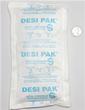
| 50 J-I | Watervaporproof protection with desiccant (general method; the specific method is coded 31-35, 41-45 or 51-55)Full requirement (5.2.3.7)Watervaporproof protection with desiccant. Items protected in accordance with Method 50 shall be heat sealed in a watervaporproof enclosure with activated desiccant. Unit packs of all of these methods shall also include a humidity indicator. Projections, sharp edges, or other physical characteristics of the item that may damage the watervaporproof bag or container shall be cushioned as required in accordance with 5.2.3. The item shall also be cushioned as required to mitigate shock and vibration, thereby preventing physical and functional damage to the item. Preservative coating requirements shall be determined in accordance with 5.2.2.1. For all Methods of Preservation where the bag is the unit container and the outer/shipping container is a wood box, see 5.2.3(l). When bags are used, the bag size shall be of sufficient surface area to permit two subsequent resealing after item inspection. Unless prohibited in the contract or order, carrying cases or housings, which function as a sealed container, may also be used as the watervaporproof enclosure within which the desiccant and humidity indicator will be placed. Precautions shall be prominently noted on the item cases or housings that the desiccant and indicator cards shall be removed prior to placing the item into use. Requirements for desiccant and humidity indicators are as follows: a. Desiccant (activated) - The bagged, activated desiccant shall conform to MIL-D-3464. Type I shall be used unless Type II or III is specified or required because of special characteristics of the item. Desiccant shall be in standard unit sized bags. The desiccant shall be strategically located in the pack so as not to be load bearing. Optimally, it is to be placed in voids of the item or pack interior. Desiccant shall be adequately secured to prevent its shifting or movement or placed in specially designed desiccant baskets affixed to the container interior. Under no circumstances shall desiccant be permitted to come in direct contact with critical surfaces of the enclosed item. The desiccant shall not be unnecessarily exposed to the ambient environment when removed from the sealed desiccant storage container. Removal of the desiccant and its insertion into the unit pack shall be the last action prior to final sealing of the bag or container. (Desiccant quantity formulas are in 5.2.3.7.b of the standard.) |
 |
| 51 J-I | Watervaporproof bag, heat sealed, with desiccantFull requirement (5.2.3.7.1)Watervaporproof bag with desiccant, heat sealed. The item, preserved, wrapped, cushioned and desiccated with humidity indicator as required in 5.2.3.7, shall be enclosed within a heat sealed bag conforming to one of the following: a. MIL-DTL-117, Type I, Class E, Style 1, 2 or 3 (1/, 2/). b. MIL-DTL-117, Type II, Class E, Style 1 or Type IV, Class E, Style 1 (2/). 1/ When specified in the contract or order, a carton or box shall be required to complete the unit container and the primary cushioning shall be placed between the outside of the bag and the inside of the carton or box. 2/ When MIL-DTL-117, Type II, Class E, Style 1 bags are selected, they shall be limited to the restrictions detailed in MIL-PRF-131 for Class 2 material. |
|
| 52 J-I | Container, watervaporproof bag, heat sealed, container, with desiccantFull requirement (5.2.3.7.2)Container, watervaporproof bag with desiccant, heat sealed, container. The item, preserved, wrapped, cushioned and desiccated with humidity indicator as required in accordance with 5.2.3.7, shall be enclosed in a close fitting inner container (box) selected from table C-I. The item and container shall then be enclosed in a heat-sealed bag conforming to MIL-DTL-117, Type I, Class E, Style 1; or Type II, Class E, Style 1; or Type IV, Class E, Style 1. Bags in accordance with MIL-DTL-6060 shall be used when the construction limitations of MIL-DTL-117 are exceeded. The sealed bag shall then be enclosed within an appropriate outer container (box) selected from table C-II. When wood, wood cleated plywood or wood cleated panelboard boxes are specified as the outer container, see 5.2.3(l). |
|
| 53 J-I | Floating watervaporproof bag, heat sealed, with desiccantFull requirement (5.2.3.7.3)Floating watervaporproof bag with desiccant, heat sealed. The item, preserved, wrapped, cushioned, and desiccated with humidity indicator as required in 5.2.3.7 and anchored or shock mounted as necessary, shall be enclosed in a sealed bag conforming to MIL-DTL-6060. When specified in the contract or order, a window of material conforming to MIL-PRF-22191, Type I shall be provided in the bag in accordance with MIL-DTL-6060 procedures for packs 15 cubic feet or larger. When specified, externally mounted plug type humidity indicators conforming to SAE AS26860 shall be used. When an exterior container is to be placed over the floating bag, a removable inspection port shall be provided in the exterior container body, so situated as to coincide with the location of the inspection window of the bag or the mounted humidity plug. |
|
| 54 J-I | Rigid container (other than metal), sealed, with desiccantFull requirement (5.2.3.7.4)Rigid container (other than metal) with desiccant, sealed. The item, preserved, wrapped, cushioned and desiccated with humidity indicator as required in 5.2.3.7, shall be enclosed in a sealed, close fitting, rigid container other than all metal. Any sealed, rigid container other than all metal may be used if the sealed container provides a WVTR not exceeding 0.075 gram per 100 square inches per 24 hours when tested in accordance with ASTM D4279 using the constant atmosphere method. |
|
| 55 J-I | Rigid metal container, sealed, with desiccantFull requirement (5.2.3.7.5)Rigid metal container with desiccant, sealed. The item, preserved, wrapped, cushioned and desiccated with humidity indicator as required in 5.2.3.7, shall be enclosed in a sealed, close fitting, metal container. Any selected type of rigid metal container with a machine seamed or welded closure or reusable container with a gasketed or threaded closure shall be used. |
|
| AE J-Ia | Seal or plug all openings and preserve by Method 10. | |
| AH J-Ia | Preserve Method 20 as follows: Fog spray or flush internally with preservative indicated by preservation code. All openings shall then be plugged or sealed to prevent entrance of dirt and moisture. Exterior unpainted ferrous metal surfaces shall be coated with a suitable paint or enamel, or coated with cold application, nontacky, corrosion preventive compound conforming to MIL-PRF-16173, Grade 4. | |
| AU J-Ia | Preservative compounds shall not be applied to windings, commutators or peripheries of armatures or rotors. Shafts shall be coated with MIL-PRF-16173, Grade 2 preservative and wrapped with MIL-PRF-121 material, secured in place with ASTM- D5486 tape. Commutators shall be wrapped with MIL-PRF-121 material, held in place with ASTM D5486 tape. Exposed surfaces of steel collector rings shall be coated with MIL-PRF-16173, Grade 2 preservative. No preservative is required for bronze, brass or corrosion resisting metals. All collector rings shall be wrapped with MIL-PRF-121 material, secured in place with ASTM D5486 tape. Corrodible surfaces, except shafts, commutators, and collector rings, may be preserved by the use of insulating varnish applied during the manufacturing process. In addition to the foregoing requirements, armatures and rotors shall be wrapped with MIL-PRF-121 material, secured with ASTM D5486 tape. | |
| AW J-Ia | Preserve in accordance with any of the following alternate methods (used for gaskets and similar items): a. Seal in bags conforming to Class B, C or E of MIL-DTL-117, using stiffening material internally if needed to maintain rigidity. b. Preservation method 42 or 44. c. Place between sheet of, or in fold of, corrugated fiberboard of sufficient stiffness to resist bending, overwrap with waterproof wrapping paper conforming to PPP-B-1055 and seal with pressure sensitive tape conforming to ASTM D5486 or adhesive conforming to MMM-A-260. Authorization to use other waterproof barrier materials may be granted upon request. | |
| BC J-Ia | Preserve by Method 20 as follows: Coat all pieces of set with preservative compound conforming to MIL-PRF-16173, Grade 4. Wrap or bag each preserved piece individually in MIL-PRF-121 material. Cushion or segregate individually wrapped or bagged pieces in the storage container to prevent movement and possible physical damage. (Segregated identical pieces, such as buckets and seal strips, are to be kept as close together in the container as possible to facilitate ease of counting.) Individually preserved, wrapped or bagged pieces need not be identified since container markings are in accordance with MIL-STD-129. Itemized packing lists for inclusion within or attachment to the outside of the container shall be furnished in accordance with MIL-STD-129. The lists shall show quantity and nomenclature of all items included in the set. (Used for turbine blade sets and similar items.) | |
| BD J-Ia | Remove parts made of rubber, fiber, or nonmetallic materials adversely affected by preservative compounds and package by Method 41 without a preservative. Preserve metal parts of assembly to conform to the requirements of Method 40. Mark the bag containing nonmetallic parts "Parts for Assembly" and include it within, or securely attached to, the pack containing metal parts in a manner which will assure its being found when the pack is opened. (Use for couplings and similar items.) | |
| BL J-Ia | Plug or seal all openings and preserve using Method 20. | |
| DB J-Ia | Preserve by Method 10 modified as follows: Preserve in transparent barrier bag made of A-A-3174 or Type III MIL-PRF-22191 material. A-A-3174 or MIL-PRF-22191, Type III material, A-A-3129 or PPP-C-795 cushioning shall be used to cushion sharp edges and protrusions of the preserved items. Bag closure shall be made by any suitable means, except that staples shall not be used. When use of a bag is not practicable, the item shall be completely wrapped in the above barrier or cushioning material and secured with pressure sensitive tape. Also, the use of shaped or molded packs utilizing MIL-PRF-22191 or A-A-3174 materials in conjunction with plastic coated board is acceptable provided the pack's cube is not increased and the pack meets the tests specified in Appendix G. Strip or block form of multiple packages shall incorporate provisions for separating unit quantities. | |
| DC J-Ia | Preserve by Method 20 modified as follows: Preserve in a transparent barrier wrap made of Type II, MIL-PRF-22191 barrier material, or bag conforming to Type II, Class C, Style 2 of MIL-DTL-117. MIL-PRF-22191, Type II barrier material shall be used to cushion sharp edges and protrusions of item to prevent bag puncture. A- A-3129 or PPP-C-795 may also be used to cushion sharp edges and protrusions if item is first wrapped in MIL-PRF-22191, Type II barrier material. The bag closure shall be made by any suitable means, except that staples shall not be used. Also, the use of shaped, preformed or molded packages utilizing MIL-PRF-22191 or A-A-3174 materials in conjunction with plastic coated board is acceptable, provided that the package cube is not increased and materials are compatible with preservative specified. However, these packages shall be capable of meeting the tests specified in Appendix G. Strip or block form of multiple packages shall incorporate provisions for separating unit quantities. | |
| DR J-Ia | Preserve by Method 30 as follows: Each unit shall have all internal fluid-carrying passages, which are not prelubricated, filled with the specified preservative, allowing space for internal thermal expansion. If filling is not practical, the unit shall be internally fog-sprayed or flushed, then drained to the drip point. All ports, fittings, openings, etc., shall be capped or plugged with noncorrosive (non- interacting) metal caps or plugs conforming to NAS 847 or equivalent. All hydraulic preservative operating fluid used shall be filtered through a 3 micron absolute filter prior to being used as specified above. Exterior bare metal surfaces, subject to corrosion, shall be coated with compound conforming to MIL-PRF-16173, Grade 2 or MIL-C-11796, Class 3. Unit shall be wrapped with a greaseproof wrap conforming to MIL-PRF-121 or equivalent; seal seams with ASTM D5486 tape to effect a measure of waterproofness and prevent unwrapping. The unit must be adequately cushioned with material specified and placed in a grade V3c container fabricated in accordance with ASTM D5118/D5118M (as a minimum), Style FOL or CSSC. All seams, corners, and manufacturer's joint shall be tape-sealed with two inch tape conforming to ASTM D5486, Type III or IV. | |
| DW J-Ia | Preserve by Method 52 as follows: Item shall be cleaned, wrapped, blocked and braced, with desiccant in an interior fiberboard box fabricated in accordance with ASTM D5118/D5118M, Class domestic. Desiccant shall be placed inside the fiberboard box. A humidity indicator shall be placed on the outside of the fiberboard box. MIL-PRF-131 barrier material, sealed as required, shall be utilized around the first container. The cushioning, to be specified under the cushioning code and in the thickness required to adequately protect the item, shall be placed between the barrier and the outer container. | |
| EK J-Ia | Preserve by Method 10 as follows: Each bolt shall have the shank and threads protected by means of a sleeve extending over the full length of the shank and thread. The sleeve shall be manufactured from paperboard, asphalt impregnated chipboard, or spiral wrap of kraft paper over chipboard, lined with material conforming to MIL-PRF-121. Plastic sleeve coverings may also be used. | |
| GS J-Ia | Preserve by Method 33 (modified) in a transparent, flexible, sealable, volatile corrosion inhibitor treated bag conforming to MIL-DTL-22020. The interleaf furnished inside each Class 2, cold sealable bag shall be withdrawn after inserting item and prior to final sealing in accordance with MIL-DTL-22020. Items with sharp edges or protrusions shall be wrapped with sufficient layers of transparent, flexible, pressure (cold) sealable volatile corrosion inhibitor barrier material conforming to MIL-PRF-22019, Type II to prevent bag puncture. The latex coated (nonprinted) side of the barrier material shall always be facing the item. Alternately, the item may be completely wrapped with transparent, flexible, pressure (cold) sealable volatile corrosion inhibitor barrier material conforming to MIL-PRF-22019, Type II as indicated above and further preserved in a transparent barrier bag conforming to Type II, Class C, Style 2 of MIL-DTL-117. Closure shall be by heat-sealing when this alternate method is used. In addition to markings required elsewhere in the contract, unit identification and caution labels shall be in accordance with MIL-STD-129. | |
| GX J-Ia | Preserve by Method 41 using an approved ESD control program (see 5.2.4.1.1) as follows: Items subject to damage by electromagnetic and electrostatic field forces shall be initially wrapped in material conforming to MIL-PRF-81705, Type III, or bags conforming to MIL-DTL-117, Type II, Class H, Style 2, and sufficiently cushioned in material conforming to A-A-3129, Type I, Grade B or PPP-C-795, Class 2 or MIL-DTL-81997, Type II or PPP-C-1797, Type II or A-A-59136, Class 1, Grade B or MIL-PRF-26514, Type III, Class 2, to protect item and to prevent bag puncture, and unit packed in a heat-sealed bag conforming to MIL-DTL-117, Type I, Class F, Style 1. Alternately if applicable, reclosable cushioned pouches conforming to MIL-DTL-81997, Type I may be used in lieu of initial wrap and cushioning. Lead or terminal configurations for all items shall be maintained as manufactured without causing loads or stresses capable of causing damage to the item. Materials used to maintain item position and lead or terminal configuration shall permit item removal without damage to the item. Electrostatic discharge (ESD) sensitive caution labels shall be applied in accordance with MIL-STD-129. |  |
| HM J-Ia | Packaging and marking for hazardous materials shall comply with applicable requirements for Performance Oriented Packaging contained in the International Air Transport Association (IATA) Dangerous Goods Regulations or the International Maritime Dangerous Goods Code (IMDG) and with Code of Federal Regulations (CFR) Title 29, Title 40 and Title 49. All performance test requirements shall be supported by certificates and reports attesting to the date and the results obtained from performance oriented packaging testing. The contractor, if not a self-certifier, shall be responsible for assuring that third party sources providing performance testing services are, in fact, registered with the Department of Transportation. The contractor's signed certification that the packaged configuration meets IATA or IMDG requirements shall be incorporated on the DD Form 250, Material Inspection and Receiving Report, and other related acceptance document if the DD Form 250 is not used. All certificates and reports shall be available for inspection by authorized Government representatives for a period of three years. | |
| JF J-Ia | Preserve by Method 10 – Items shall be preserved in a vacuum formed skin pack, formed from either cellulose acetate, cellulose butyrate or cellulose propionate. The material shall be 10 to 15 mils minimum thickness prior to draw and 2 to 4 mils thickness after draw. Class domestic fiberboard meeting the requirements of ASTM D4727/D4727M shall be used as a stiffener. | |
| ZZ J-I | Special requirements apply that are not represented by the code symbols; details are provided with the acquisition document (see J.4.1.b). |
Product photos courtesy of All Military Packaging (allmilspecpackaging.com), used with permission. Photos show a product made to the specification and are for reference.
Descriptions from MIL-STD-2073-1E w/Change 4 (22 April 2019), Appendix J; validated by Notice 1 (27 June 2024). Illustrations show the general type of material and are not specification-exact. Always confirm requirements against the contract and the current standard in ASSIST.